
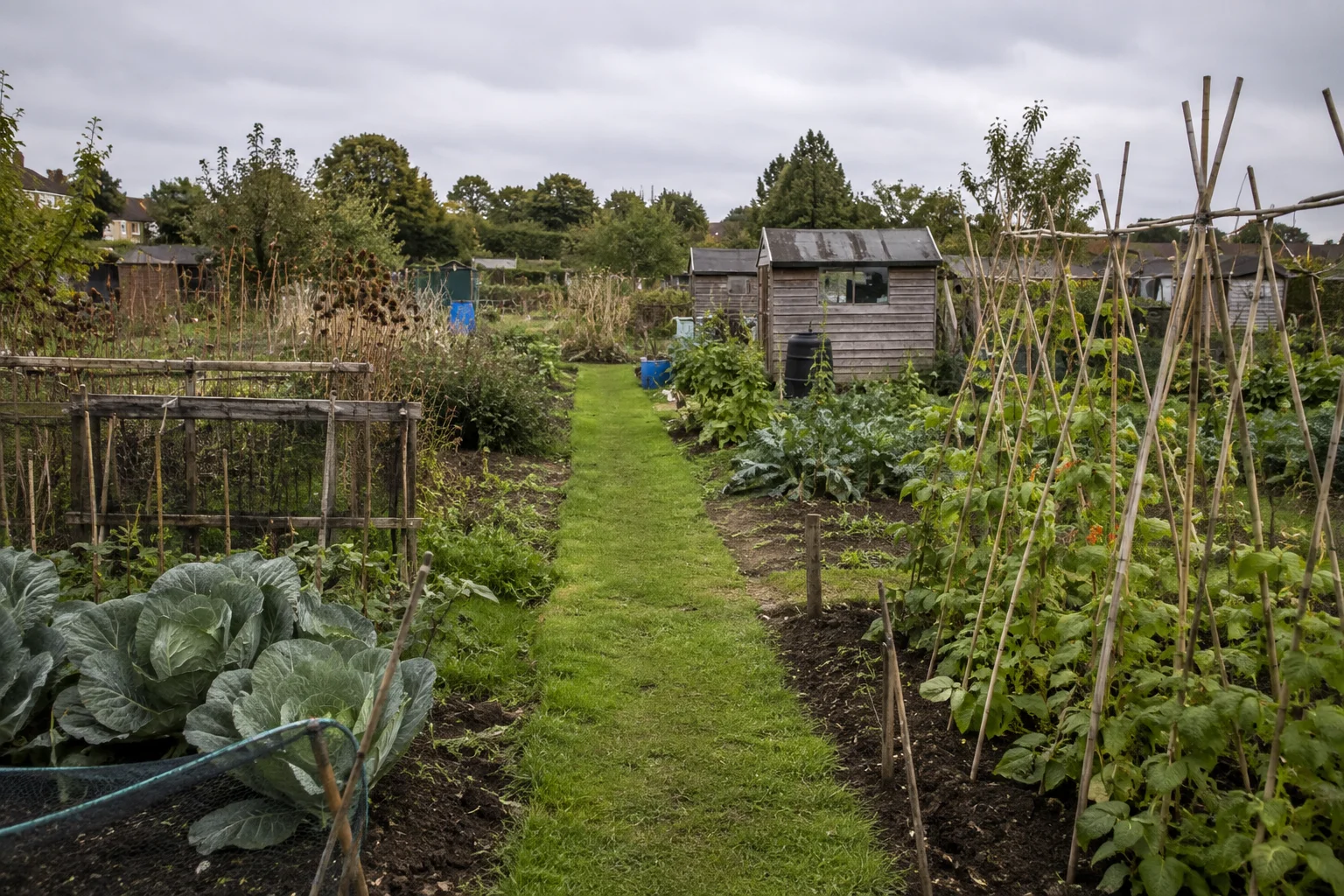
A patch of beans and a shed might look much the same behind a house as they do on an allotment site. The difference is how the land is used and who looks after it. An allotment is a plot rented for growing food, flowers or other plants, usually within a larger site divided into individual plots.
It need not belong to the council. Community groups and private landowners also run allotment sites. The plot holder rents their growing space rather than owning it, and the site brings several gardeners together on neighbouring pieces of land.
This explanation of allotment meaning puts growing at the centre of the definition. That helps distinguish an allotment from a public park, where visitors enjoy the grounds but do not normally have a particular patch to cultivate. It also explains why an allotment can be useful to someone whose home has no garden.
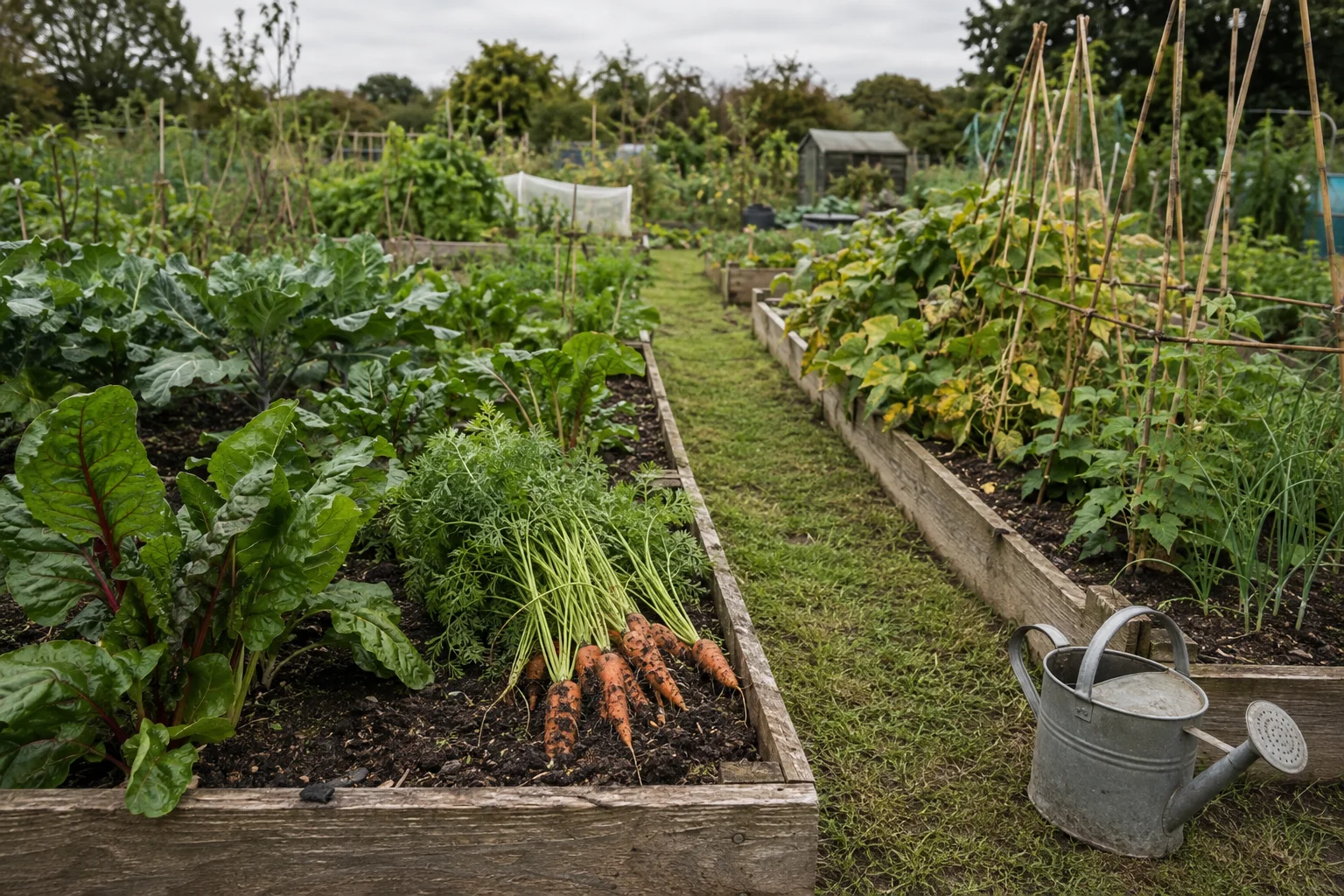
A plot of your own within a shared site
The word can cause confusion because people use it for both an individual plot and the whole site. Someone saying they are going to “the allotment” might mean their own beds. A sign for “the allotments” usually refers to the collection of plots behind the gate.
A community garden may work differently, with people tending shared beds together. The arrangements vary, so the name alone will not tell you how every site operates. On an allotment site, neighbouring growers might swap spare seedlings or share advice while each looking after their own crops. Shared company does not have to mean a shared harvest.